Human Service Work
For more than five decades, Mary T. Howard has worked across community service, mental health, public health, residential care, education, and advocacy.
Beginning with youth and community programs in the 1960s, her work took her from Washington, DC, and Ohio to Michigan, Tanzania, and Bolivia, bringing her into close contact with people whose lives were shaped by poverty, disability, illness, and the institutions responsible for their care.
These experiences became inseparable from her work as an anthropologist, educator, writer, and documentary filmmaker. Whether working alongside residents of a group home, conducting research with families in Tanzania, teaching students, or documenting homelessness in Columbus, Mary has remained attentive to how people navigate difficult circumstances, form relationships, and seek greater agency, independence, and dignity.
Her work reflects a sustained commitment to understanding people's lives, questioning the assumptions and practices of institutions, and exploring the possibilities for care, community, and meaningful change.
Community Programs and Early Care, 1963–1970
1963 | Northwest Community Center, Washington, DC
Afterschool recreation worker, supporting community activities and programs for young people.
1964 | Camp Wyandot, Hocking Hills, Ohio
Director of Camp Blampied, the advance-camper unit of Camp Wyandot.
1965 | St. Stephan's Community Center, Columbus, Ohio
Director of a summer camp program for inner-city youth.
1965–1967 | Rosemont School for Girls, Columbus, Ohio
Housemother for the Transition Unit, working in a residential program for young women.
1965–1967 | Central Community House, Columbus, Ohio
Afterschool recreation specialist in the Old Town East neighborhood.
1966 | Step Up Program, Washington, DC
Director of a summer camp program for inner-city youth associated with Vice President Hubert Humphrey's Step Up initiative.
1967–1968 | St. Lawrence Hospital, Lansing, Michigan
Psychiatric social worker on the hospital's fifth-floor psychiatric unit.
1968–1970 | Shiawassee Street Halfway House, Lansing, Michigan
Co-director of what the CEO of St. Lawrence Hospital Community Mental Health Center identified as Michigan's first halfway house, providing community-based support for people transitioning from psychiatric institutions.
Public Health and Research in Tanzania, 1970–1975
1971–1972 | Kilimanjaro Christian Medical Center, Tanzania
Researcher for the Public Health Department, working on questions of health and community life in the Kilimanjaro region.
1971–1975 | Moshi International School, Tanzania
Teacher of fourth grade and social studies at the middle- and high-school levels.
1972–1973 | UNICEF Young Child Study, Kilimanjaro Region, Tanzania
Researcher studying the circumstances of children and families.
1973–1974 | Economic Research Bureau, University of Dar es Salaam, Tanzania
Researcher examining economic and social conditions.
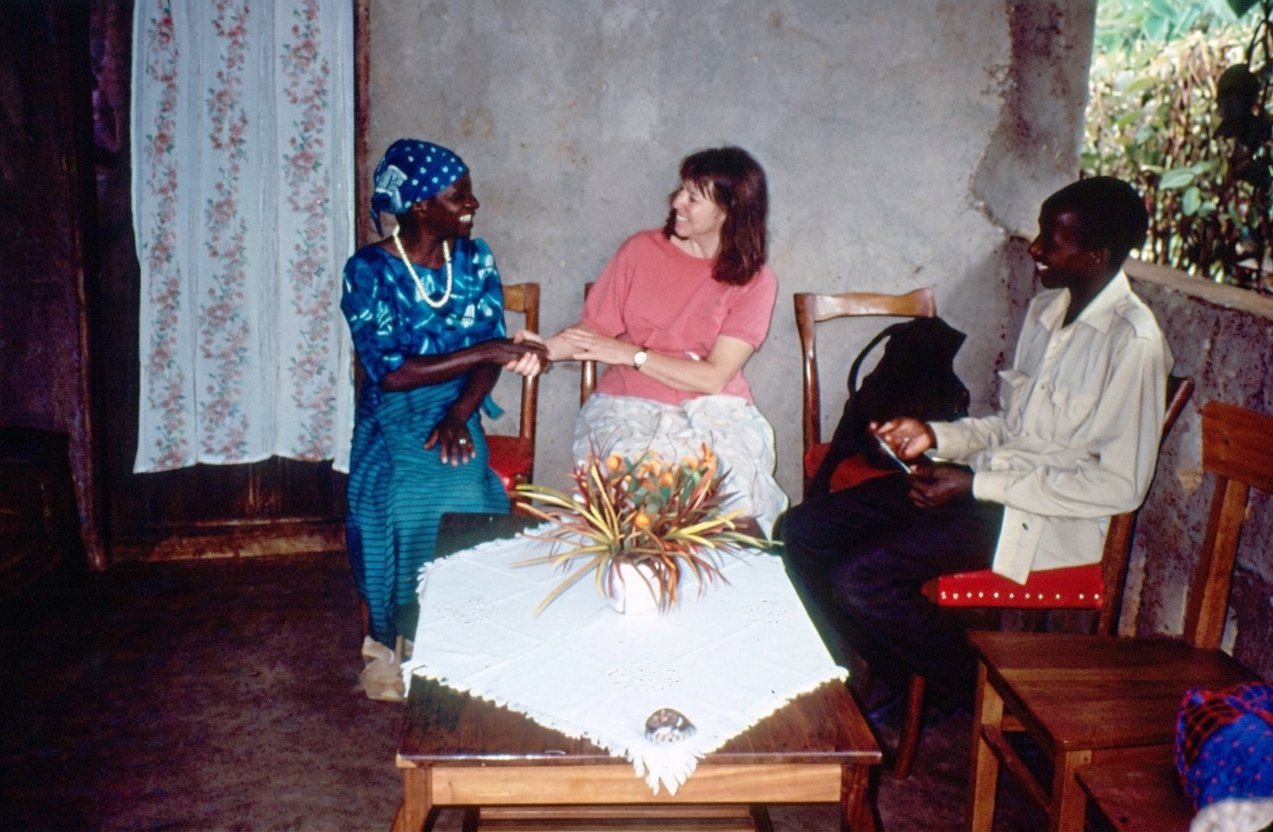
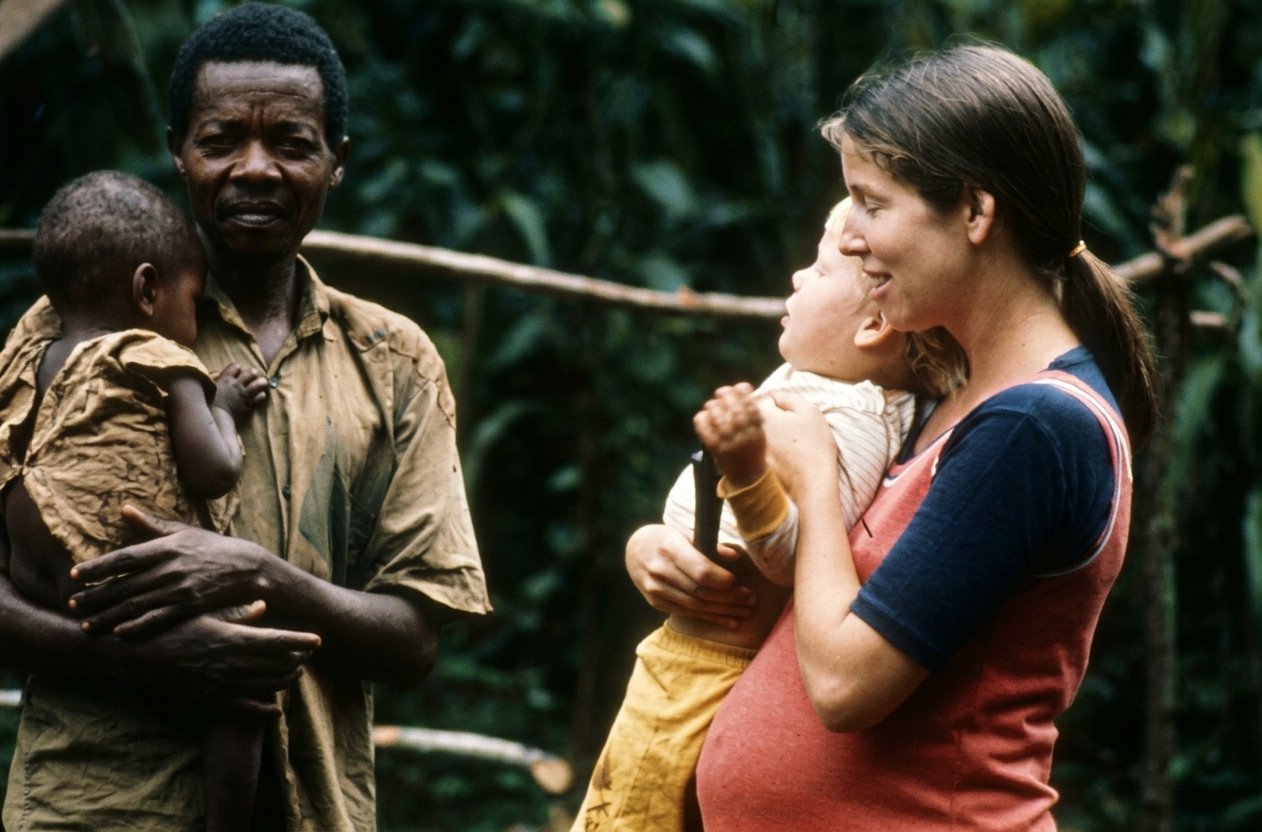
Mary's years in Tanzania brought her into close contact with families facing childhood malnutrition and economic hardship. Her research examined questions of child nutrition, health, family stress, and community life in the Kilimanjaro region. It explored how household resources, cultural expectations, and social relationships influenced the health and well-being of children, even in communities with access to productive land and agricultural resources.
Her work also examined the economic and social conditions affecting the status of women in the Kilimanjaro region. Mentored by anthropologist Maria Liza Swantz, Mary learned methods of "research in action," employing Indigenous researchers to raise their consciousness about their own social conditions and develop ways of addressing the problems affecting their communities.
The UNICEF Young Child Study examined the circumstances of children and families in the Kilimanjaro region. Mary connects this research with preparations for UNICEF's GOBI program, which focused on four approaches to child health: growth monitoring, oral rehydration, breastfeeding, and immunization. The program sought to improve child survival and reduce rapid population growth.
This work contributed to Hunger and Shame: Child Malnutrition and Poverty on Mount Kilimanjaro, coauthored with Ann V. Millard and published in 1997. The book explores the relationships among poverty, inequality, family life, and the social conditions surrounding childhood malnutrition.
Residential Care and Disability, 1979–1983
Living and working alongside residents at Pine Forest gave Mary a close understanding of the relationships, conflicts, and routines of residential care. She witnessed how institutional regulations could restrict independence and how residents sought greater control over the decisions affecting their lives.
These experiences became central to her writing about disability, institutional authority, and the possibilities of more compassionate care. They also formed the foundation of her forthcoming memoir, Confessions of a Care Worker: Stories of Disability and Dignity, to be published by Plainspoken Books in March 2027.
1979–1981 | Pine Forest, Lansing, Michigan
Live-in counselor at a group home for sixteen adults with intellectual and developmental disabilities.
1981–1983 | Pine Forest, Lansing, Michigan
Case manager, continuing her involvement in the care and daily lives of the home's residents.
Teaching and Writing in Bolivia, 1983–1984
1983–1984 | Colegio Cooperativo Americano, Santa Cruz, Bolivia
Teacher of twelfth-grade psychology.
During her time in Bolivia, Mary taught twelfth-grade psychology at Colegio Cooperativo Americano in Santa Cruz. Drawing on the research-in-action methods she had learned from anthropologist Maria Liza Swantz, she developed student projects involving prisons, street beggars, and people with cocaine addiction.
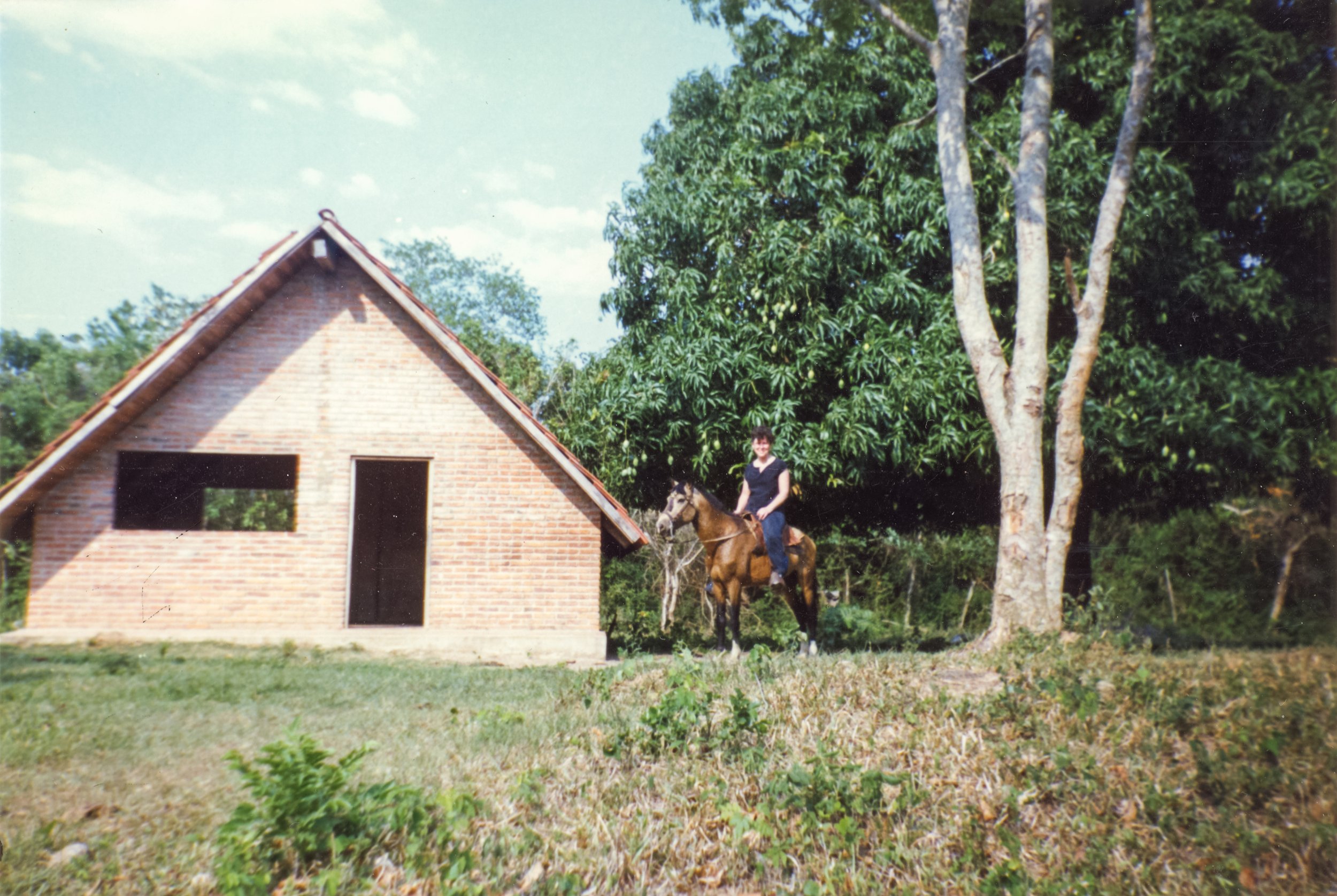
Mary also worked on an early manuscript at her brother's property. The writing, which she recalls under the working title Home, would eventually develop into Confessions of a Care Worker.
The photographs from this period document the place where she worked on the manuscript and the surrounding Bolivian landscape, connecting the early stages of her writing to a book that would emerge decades later.
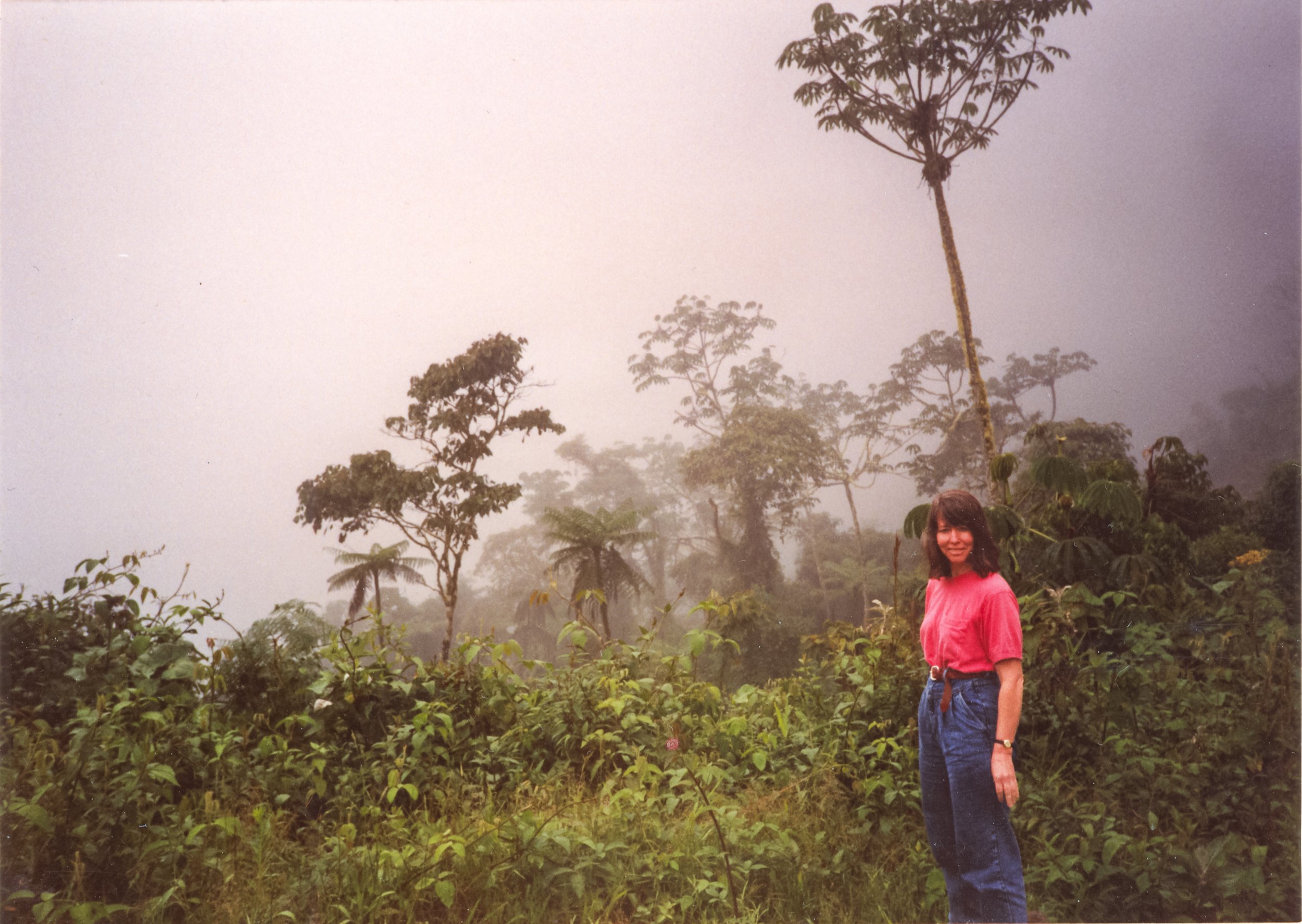
Photographs from Bolivia
Mary’s sister Ann on horseback at her brother's property in Bolivia, next to outbuilding where Mary worked on an early manuscript that eventually developed into Confessions of a Care Worker.
Mary in the Bolivian rainforest during her time living in South America.
1985–2019 | Ohio Wesleyan University, Delaware, Ohio
Professor of sociology and anthropology. Mary brought her experiences in community work, public health, and residential care into the classroom, encouraging students to connect academic research with people's everyday lives.
2004–2019 | The Open Shelter, Columbus, Ohio
Board member of an organization serving people experiencing homelessness. Her involvement continued a longstanding commitment to community advocacy and the experiences of people living outside traditional institutions of care.
These early experiences brought Mary into close contact with individuals, families, and communities navigating the challenges of everyday life. They shaped her understanding of care, independence, and social responsibility, and informed the questions she would continue to explore through anthropology, teaching, documentary filmmaking, and writing.
Education and Community Advocacy, 1985–2019
Documentary Film and Community Advocacy
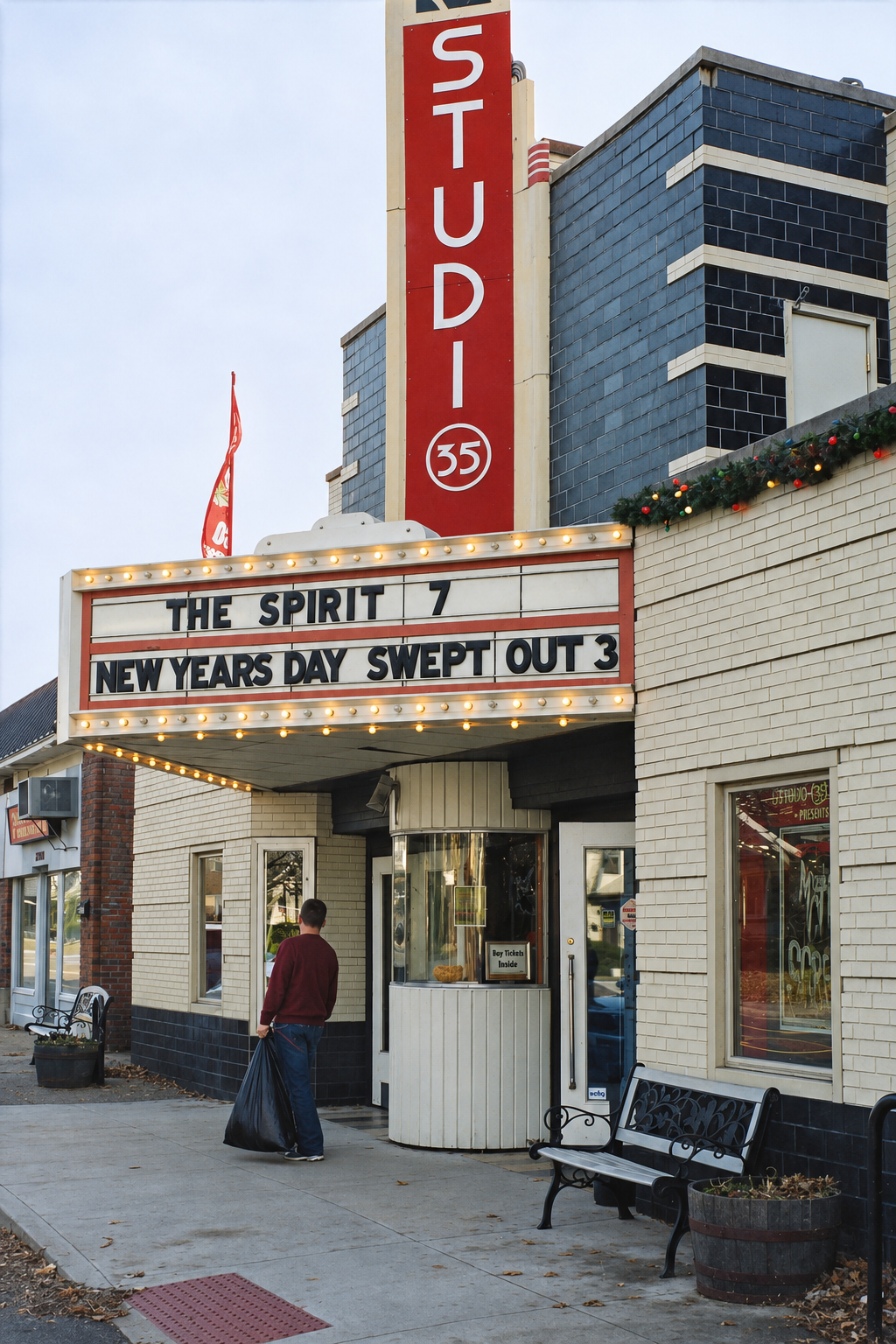
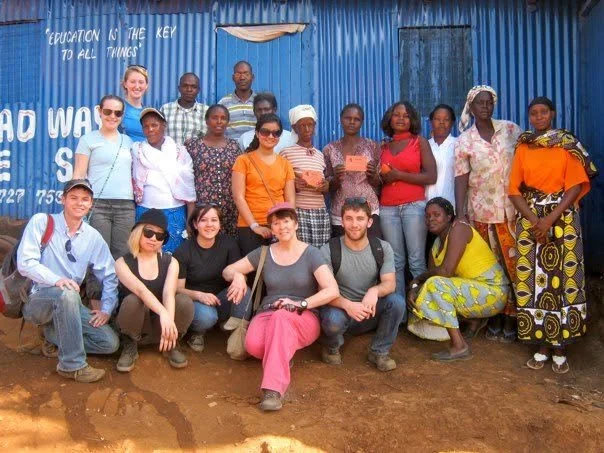
These years brought together Mary's interests in research, education, and direct engagement with communities. Her teaching and advocacy connected academic inquiry with people's everyday lives through class projects, presentations, and work beyond the classroom.
During a 2012 semester abroad with a service-learning component, Mary's group met with Ben Wallingford, a former student from her service-learning trip to Bolivia. Wallingford went on to lead Mano, a women's microfinance organization in a low-income community in Nairobi, Kenya.
Her teaching was informed by the same concerns that shaped her earlier work: the effects of poverty and social exclusion, the responsibilities of institutions, and the importance of individual dignity. Drawing on her experiences in community service, public health, and residential care, she encouraged students to examine social problems through direct engagement with the people and communities affected by them.
Mary's involvement with The Open Shelter and her longstanding interest in homelessness also informed her documentary filmmaking. Through films including Swept Out and Outreach, she brought attention to the lives and experiences of people living outside the shelter system in Columbus, Ohio.
Rather than approaching homelessness solely through statistics or public policy, her films follow individuals as they navigate everyday life, relationships, and the search for stability under difficult circumstances.
Mary's documentary work was screened at the Strand Theater in Delaware, Ohio; the Drexel Theater in Bexley, Ohio; and Studio 35 in Columbus. Her films were also presented at dozens of churches and nonprofit organizations in Cleveland and Columbus, bringing her documentary work to local audiences.
Through these screenings and collaborations with students, Mary extended her work beyond the university and brought the experiences of local communities into public conversation.
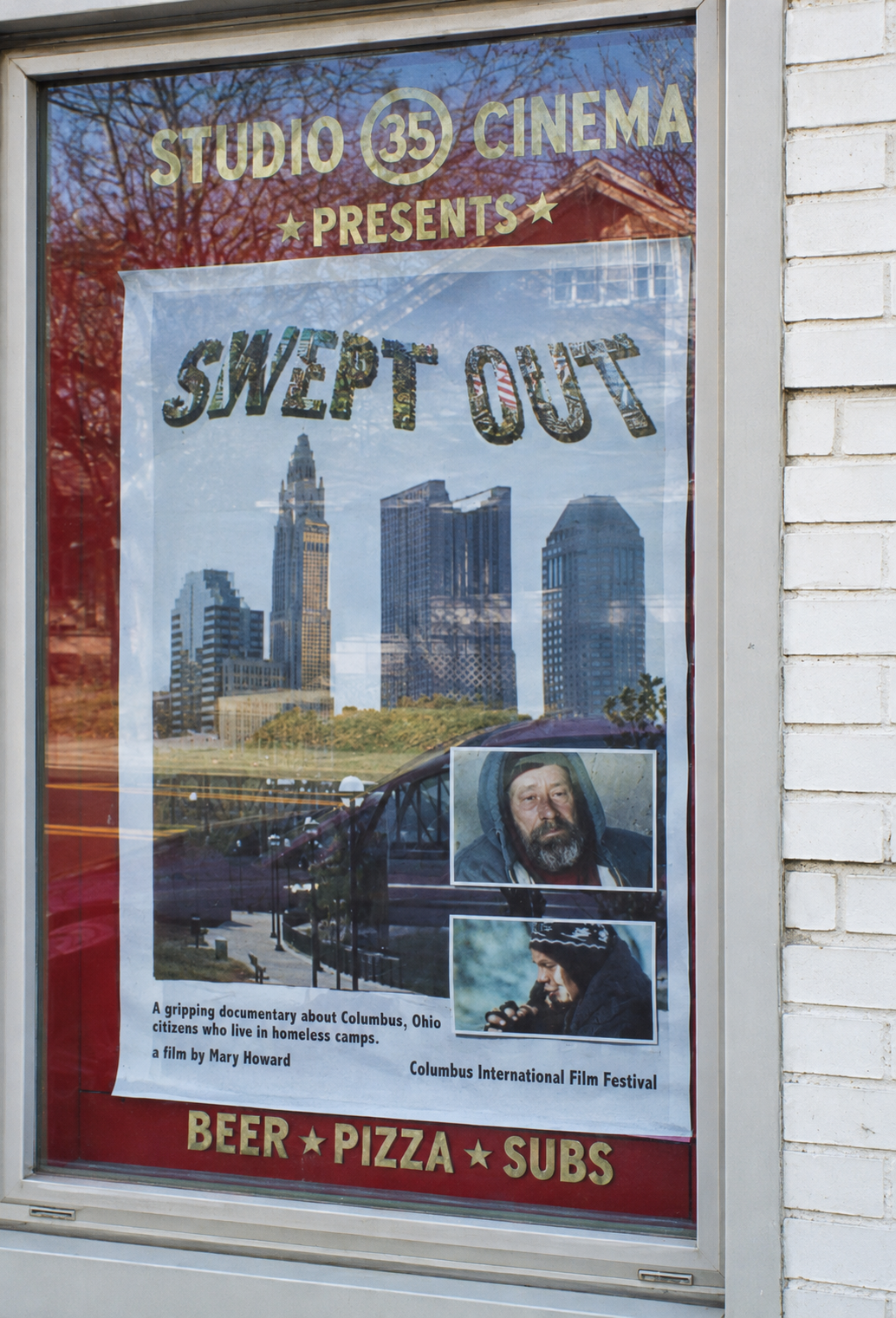
Swept Out at Studio 35, Columbus, Ohio. Photographs of the theater marquee and promotional poster documenting a screening of Mary T. Howard's film.
Recognition
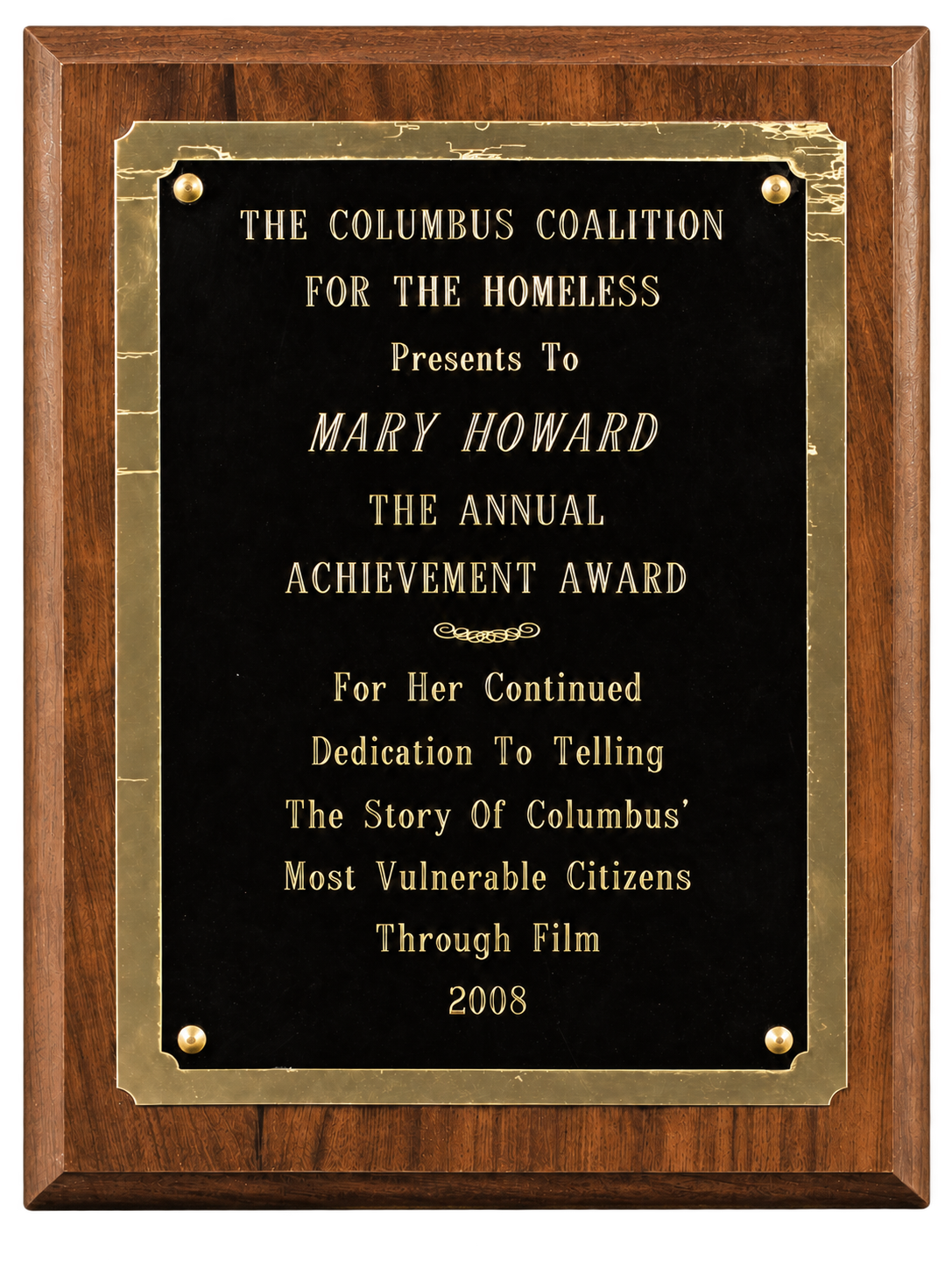
Columbus Coalition for the Homeless
Annual Achievement Award, 2008
In 2008, Mary received the Annual Achievement Award from the Columbus Coalition for the Homeless in recognition of her continued dedication to telling the stories of Columbus's most vulnerable citizens through film.
The award reflects the relationship between her documentary practice and her longstanding involvement in community advocacy.
Across more than five decades, Mary's work has moved between direct service, research, teaching, writing, and filmmaking without losing sight of the people at its center. Her experiences reflect a continuing concern for how institutions shape individual lives and how care, mutual responsibility, and human relationships can offer possibilities for greater freedom and dignity.